
Last updated November 23, 2026
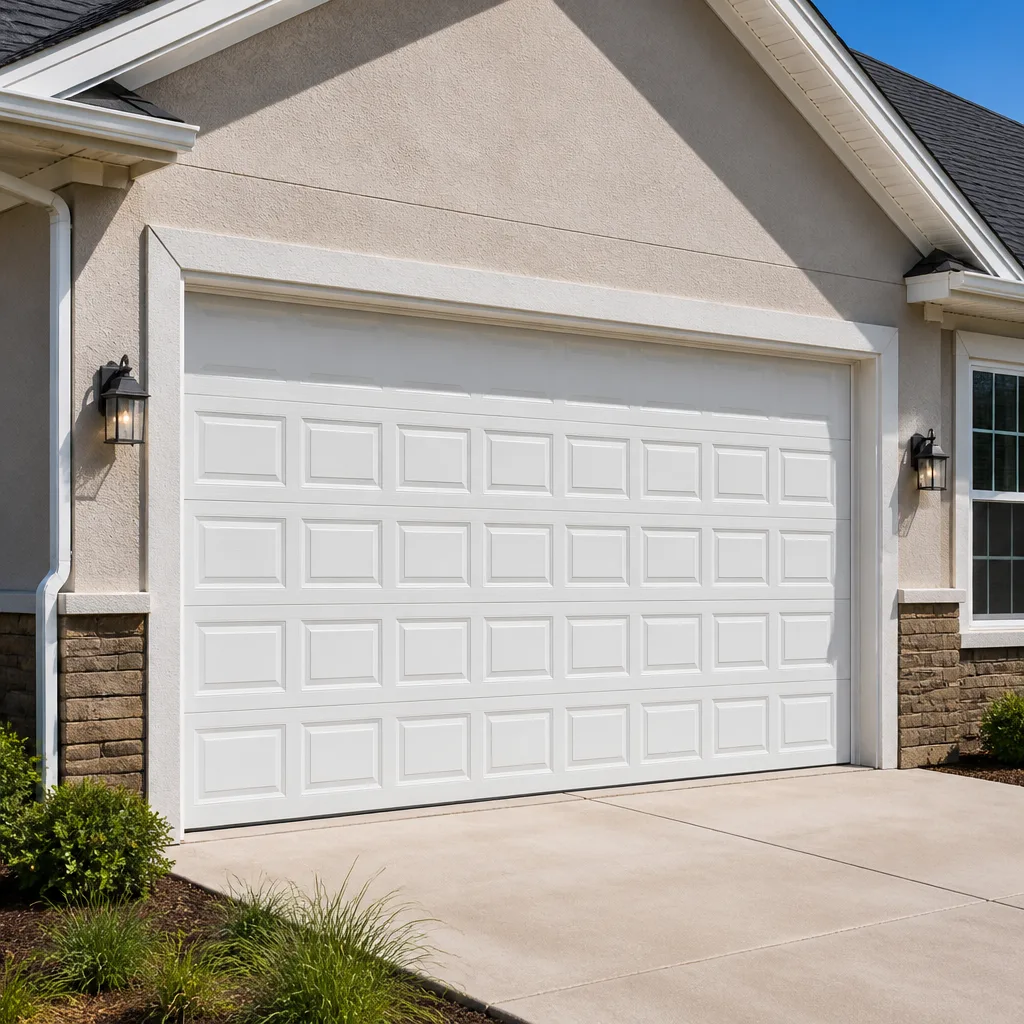 Raised-panel steel
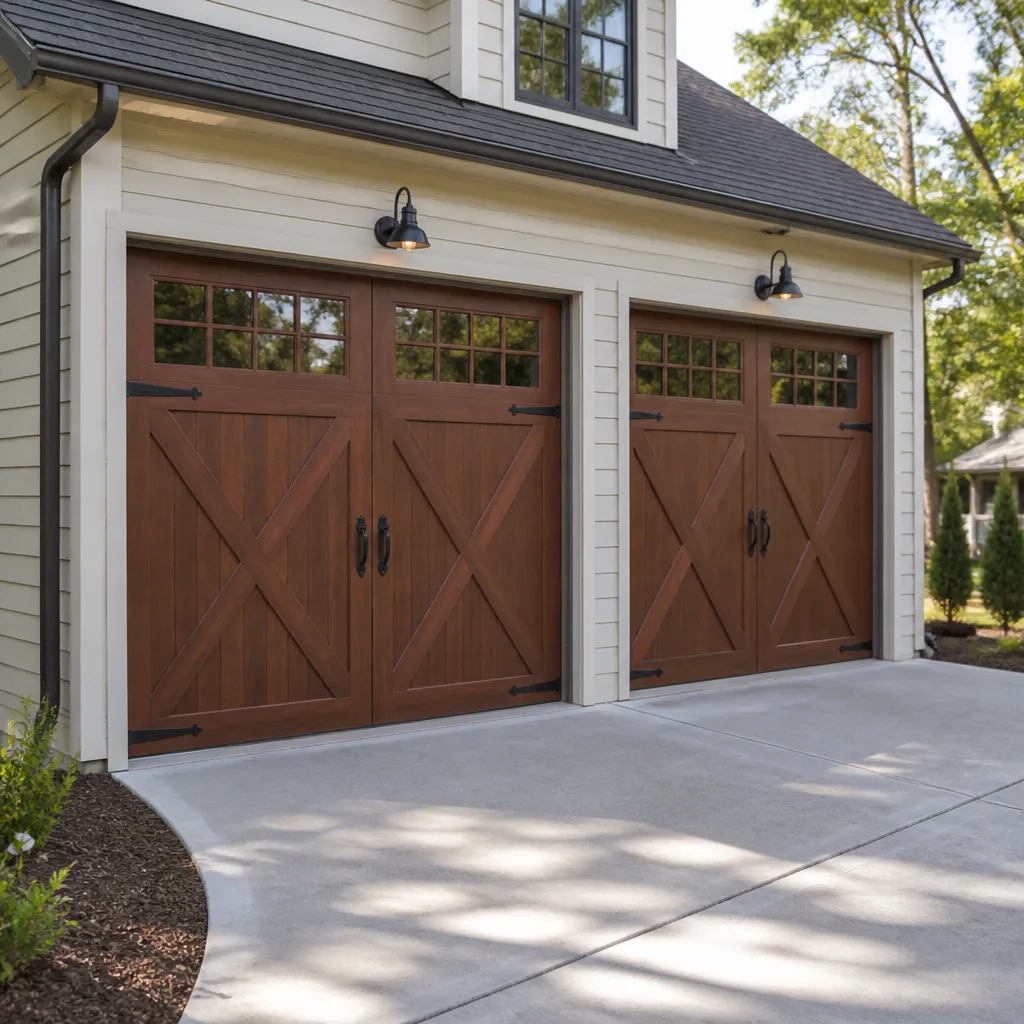 Carriage house
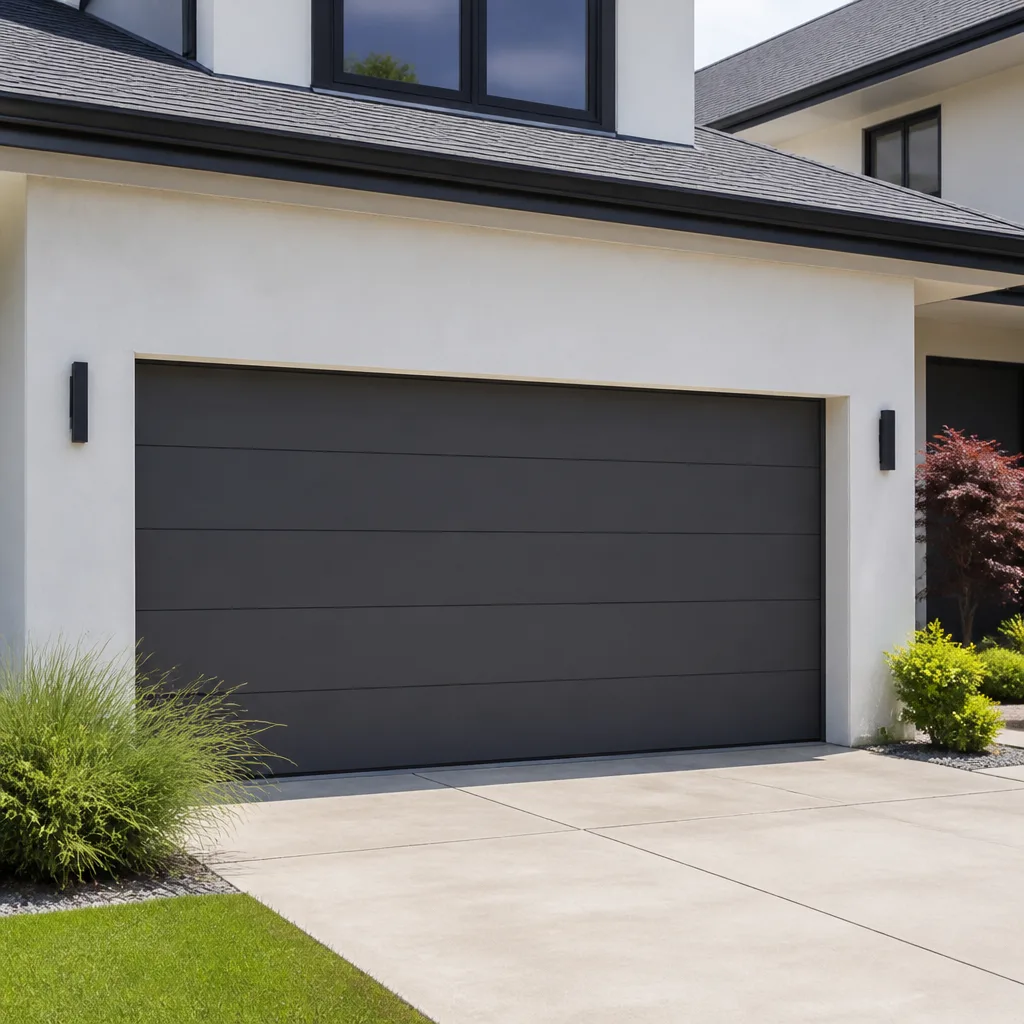 Modern flush
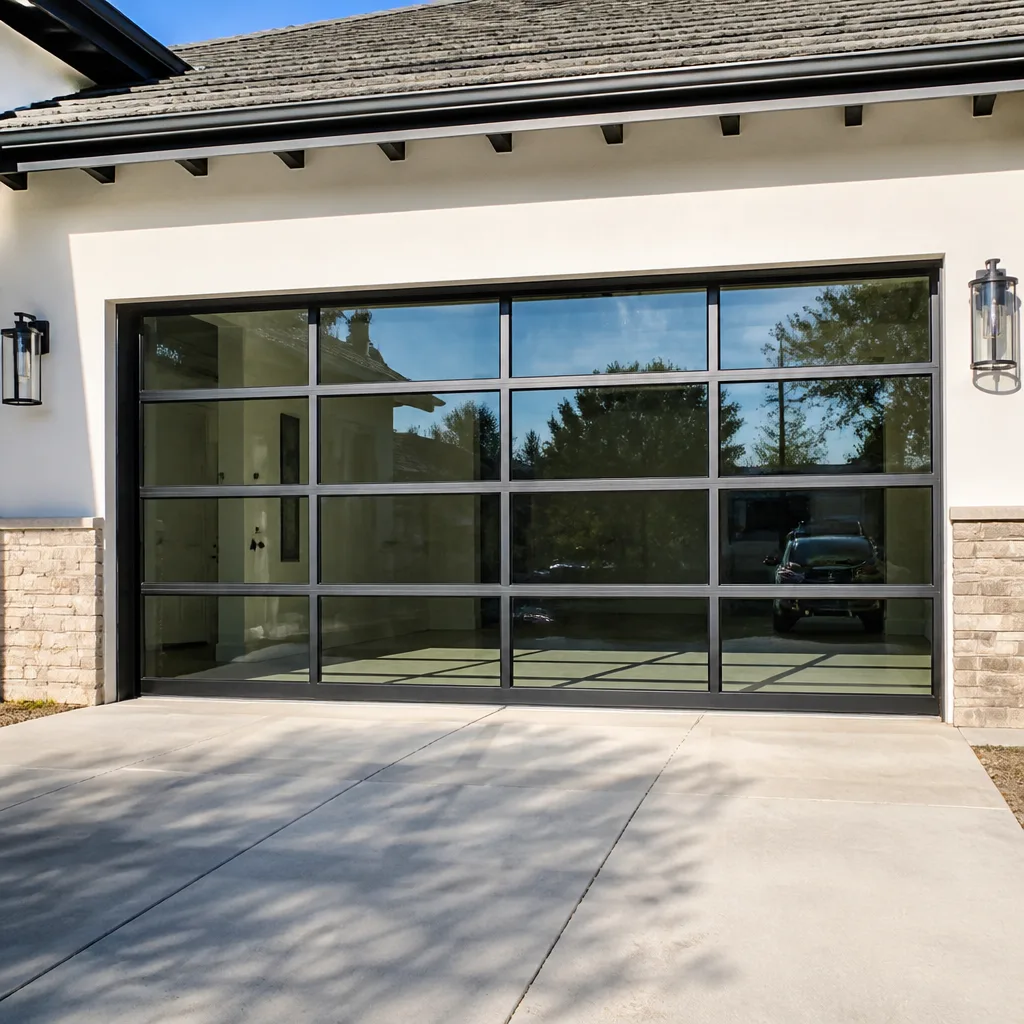 Full-view glass
 LiftMaster openers
 Chamberlain openers
Full 25-point door and opener safety check with every visit - springs, cables, rollers, tracks, and your LiftMaster or Chamberlain opener included
You get a price before we start. It does not change when the pro arrives.
Get your free estimateHow to Hire a Garage Door Contractor in Capitol Hill: A Step-by-Step Guide
Ask a contractor to name the torsion spring wire diameter for your door’s weight and most bidders will go quiet. That silence is useful. A garage door is a balanced machine under constant tension, and the people who work on it safely are a small slice of the people who will happily take the job. In Capitol Hill, where a lot of the housing stock is old and the doors have been replaced or re-sprung more than once, the gap between a specialist and a generalist shows up fast: springs chosen by guesswork, openers wired to the wrong door weight, warranties quietly voided by parts that don’t belong together. This guide walks you through vetting a contractor step by step, from the first phone call to reading the estimate line by line, so the person who shows up is the one who should be there.
Quick Answer
Hire a garage door contractor in Capitol Hill by confirming three things before anyone quotes you: that they specialize in garage doors rather than treating them as one of many trades, that they can name the specific parts and spring specs your door needs, and that the written estimate separates labor, parts and any permit costs instead of bundling them. Verify the business is registered and bonded in Washington State, ask how they handle permits for a door replacement, and get the price in writing before work starts.
Styles & brands we work with
- Raised-panel steel
- Carriage house
- Modern flush
- Full-view glass
- LiftMaster openers
- Chamberlain openers
Table of Contents
- Why a Garage Door Specialist Beats a General Handyman
- What Washington State Requires and What to Verify
- Five Questions That Reveal a Specialist
- How to Read a Garage Door Estimate Line by Line
- Permits for Replacement Doors on Older Capitol Hill Homes
- Brand Claims vs. Brand Fluency
- Red Flags Specific to Capitol Hill
- How a Typical Job Actually Goes
Why a Garage Door Specialist Beats a General Handyman
A garage door is not a door in the way a front door is a door. It’s a counterweighted mechanical system. The springs carry the weight of the door so a small motor, or your arm, doesn’t have to. The tracks control a hundred-plus pounds of moving panel on a fixed path. When one part is out of balance, everything else wears faster. A general handyman who also does decks, faucets and drywall may understand that in theory. The question is whether they’ve touched your brand and your door type enough times to make the right call in practice.
In our experience across Capitol Hill, the tell is what happens after the repair. A door that’s fixed correctly runs quietly and stops needing attention. A door whose spring was matched by eye or whose opener was wired to the wrong door weight comes back: new noises, uneven travel, a motor that strains. That repeat call is the cost of a generalist taking a job that should have gone to someone who does only this.
Garage doors are all we do. That matters less as a slogan than as a working habit. Our technicians have up to 14 years of experience, and every job on the schedule is a garage door job, whether it’s a torsion spring replacement, a garage door opener repair, or a full swing from broken spring to a new door. Here’s what a specialist can actually do that a generalist usually can’t:
- Match the spring to the actual door weight rather than to whatever’s in the truck.
- Recognize a failed part versus a failing system. A snapped spring and a bent track can look like one problem and be two.
- Carry the right opener components for the brand you already own instead of ordering them and leaving you with a propped-open door in the meantime.
- Service springs in-house. Torsion and extension springs are the most dangerous part of the trade, and a company that outsources that work is telling you something about its depth.
That last one deserves a safety note. Torsion springs and the cables attached to them are under extreme tension. A spring that lets go while someone is working on it can cause serious injury, and there’s no safe way for a homeowner to handle that part themselves. When we say spring repair is high-risk work, we mean it’s the one job on a door you should never try to shortcut with a video and a pair of clamps. A trained technician with the right winding bars and the right tools is the only safe path.
What Washington State Requires and What to Verify
Washington State requires contractors who do work on your home to be registered with the state, and that registration is tied to bonding and insurance requirements. Garage door repair and installation is construction work, so the person doing it should be able to show you a valid registration. A general contractor’s registration doesn’t automatically mean they’re the right fit for a door, and a garage door specialist’s registration should be current and specific to the work they’re doing. Don’t take a claim at face value. Ask for the registration number and verify it with the state before anyone shows up.
Here’s a short checklist for the verification step:
- Ask for the contractor registration number and confirm it’s active through the state’s contractor lookup.
- Confirm general liability insurance is in force for the year of the job. A certificate of insurance should list the coverage dates.
- Ask about workers’ compensation coverage if the crew is more than one person. This protects you if someone is hurt on your property.
- Get the name of the registered business and make sure it matches who’s quoting you. A different name on the estimate than on the registration is a question to ask.
- Ask who actually performs the work. If the person on the phone is dispatching a subcontractor, you want to know that up front rather than when a different company’s truck pulls up.
Registration is the floor, not the ceiling. A company can be registered, insured and still send someone to your door who has never worked on your brand or your door weight. The registration protects you in the event of a problem. The specialization is what prevents the problem. You want both.
If you’re comparing bids, ask each contractor the same set of questions and write the answers down. The ones that hesitate on the specifics are usually the ones who would’ve hesitated on the job too. We answer all of these on the phone before we ever schedule a visit. Call (844) 625-7327 for a free estimate and ask us the same questions you’d ask anyone else.
Five Questions That Reveal a Specialist
You don’t need to know garage door mechanics to spot an unqualified bidder. You just need to ask questions whose answers require someone to have actually done the work. The wire-diameter question at the top of this guide is one. Here are five more, and what a good answer sounds like compared to a bad one.
- “What spring type and size does my door take, and how do you determine it?” A specialist looks at the door weight, the track type and the existing spring and can talk through torsion versus extension and left-wound versus right-wound. A generalist will say “we’ll figure it out when we’re there” or name a size without looking at the door.
- “Which brands do you work on, and how do you source their parts?” A specialist doesn’t just name brands. They know that opener parts and door parts come from different places, and that a LiftMaster opener and a Clopay door are not interchangeable systems. Listen for whether they source parts directly or order and wait.
- “How do you handle a fully tensioned torsion spring?” The correct answer involves specific tools, winding bars and a controlled release. A bidder who says “we just cut it” or “we release the tension by hand” is telling you they don’t do this often. This is the question that separates someone who’s done it safely a thousand times from someone who’s watched a tutorial.
- “Will you give me a written estimate before any work starts?” A specialist will. A generalist will often say “we’ll see how it goes.” Any job with an unknown scope should still come with an agreed price or a clearly stated range and a plan for what changes it.
- “Do you handle permits for a door replacement, and who pulls them?” On Capitol Hill’s older housing stock, a replacement door on some homes may need a permit depending on the scope and the structure. A specialist knows to ask. Ask your city’s building department about the specific address before you sign anything.
These aren’t trick questions. They’re the questions any competent specialist asks themselves before quoting. A good contractor will enjoy being asked because it lets them show what they know. A bad one will get defensive, change the subject, or promise a price on the spot without looking at the door. That reaction is worth more than any review you can read.
How to Read a Garage Door Estimate Line by Line
The most common place Capitol Hill homeowners get burned isn’t the total at the bottom of the estimate. It’s the bundled “labor and parts” line that hides what’s inside it. A single number that covers a spring, the labor to install it and the cleanup is convenient, but it also makes it impossible to tell whether you’re paying for a proper replacement spring or a cheaper one that will fail sooner. Ask for the estimate to separate the two.
Here’s what a good written estimate should lay out, and what each part actually means:
- Parts line, itemized. The spring type and size, the opener model if one is being replaced, hinges or rollers if they’re being swapped. An itemized parts list lets you compare bids on the same components.
- Labor line. Sometimes a flat rate per job, sometimes an hourly estimate with a not-to-exceed number. Either is fine, as long as it’s written down and agreed before work starts.
- Permit line, if applicable. If the job requires a permit, the cost should be shown separately. If the estimate doesn’t mention permits on a replacement door, ask why.
- Cleanup and haul-away. A real estimate says whether old parts and packaging are being removed or left with you.
- What’s not included. The best estimates say what they don’t cover: a bent track discovered mid-job, a worn opener that turns out to be the actual problem. The price is set per job by the written estimate, so any change should be discussed before work continues.
Bundled pricing isn’t automatically bad. Some jobs really are one number because the parts and labor are inseparable. The problem is when the bundle hides the part quality or the markup. If a spring repair estimate is dramatically lower than the others you’ve collected, ask what spring is being used. The cheapest quote often gets there by using a lighter spring, which wears out the opener and the door faster. You’re not saving money. You’re paying it forward with interest.
Here’s the general shape of cost ranges you should expect in the Capitol Hill market, and then the written estimate is what sets the final price:
- Spring replacement, one spring: typically $180 to $340.
- Spring replacement, matched pair: roughly twice the single-spring range, since a matched pair is usually replaced together.
- Opener repair: varies with the failure. A remote or logic board is a different job than a stripped gear.
- New door installation: a measure, a written price and a scheduled install, not a same-day repair.
Spring pricing is one of the clearest places to see why a line-item estimate matters. A single spring price is for one spring. If both springs are worn, replacing one is a temporary fix that will have you calling again. Ask the bidder how they’re deciding between one and a pair. A specialist will tell you the reasoning. A generalist will tell you what’s easiest.
Permits for Replacement Doors on Older Capitol Hill Homes
Capitol Hill’s housing stock includes a lot of older homes, and older homes have quirks that newer construction doesn’t. A garage opening that was framed decades ago may not meet current standards for a modern door’s weight or opening dimensions. A door replacement that changes the size of the opening, the header or the structural support around it can trigger a permit requirement that a simple like-for-like swap might not. That’s not a reason to avoid the work. It’s a reason to ask before you sign.
What to ask:
- “Will this replacement require a permit at my address?” Ask your city’s building department about the specific scope of work. The answer depends on what’s changing, not what’s being installed.
- “Who pulls the permit?” If a permit is required, the contractor should know the process and either pull it or tell you clearly that you’re responsible.
- “Does the new door’s weight change the opening spec?” On an older home, a heavier or larger door can mean framing changes. If the estimate doesn’t mention that, ask.
- “What happens if the inspection finds something?” A good estimate has an answer for that. A poor one doesn’t.
Here’s where a specialist earns their price. A door replacement in Capitol Hill isn’t always a straight swap. A generalist who doesn’t ask about permits at all is telling you they don’t do replacement work often enough to know it can matter. A specialist who asks about the address, the opening and the structural scope before quoting is telling you they’ve been here before. That’s the difference between a repair and a remodel that failed inspection.
If your door replacement is part of a larger project, ask your general contractor who’s handling the garage door portion. It’s common for the GC to hand off the door to someone they trust. Ask to see that scope in writing separately. On a garage door, that’s not being difficult. It’s reading the estimate.
Brand Claims vs. Brand Fluency
Many garage door companies will tell you they “service all major brands.” A few will say they’re “authorized” or “factory-certified.” Those are different statements. Servicing a brand means working on the parts, however they came into the truck. Authorized or certified means the manufacturer has a relationship with the company, often tied to warranty work and specific parts channels. Not every company making the second claim can back it up.
We’re not a factory-certified dealer for every brand, and we’ll tell you so. What we do have is hands-on familiarity with eight of the industry’s most widely installed brands: LiftMaster, Chamberlain, Genie, Clopay, Amarr, Wayne Dalton, Craftsman and Raynor. That’s the stuff actually bolted to the wall in most Capitol Hill homes. We work on the brand you already have, which is a more useful promise than a dealer badge on a website. If you own a Chamberlain opener or a Clopay door, we’ve worked on that pairing. If you own a Raynor or an Amarr, that’s covered too.
How to verify brand claims before you hire:
- Ask specifically which brands they work on and which ones they don’t. A specialist is fine saying “we don’t carry that brand.” A generalist who says “all of them” usually means they’ll try.
- Ask about parts sourcing for your brand. Some brands have specific parts channels and aftermarket substitutes that don’t fit right. A specialist knows the difference.
- Ask whether they stock or supply the part or order it. If they order, ask how long your door stays open. Parts availability is a service, not an afterthought.
- Ask about warranty implications. A mismatched part can void a manufacturer’s warranty on an opener or a door. A specialist knows how to keep your warranty intact.
Brand fluency shows up in the details. Whether an opener’s safety reverse sensors will work with the door’s weight, whether a particular lift-assist spring pairing fits an older door, whether a specific brand’s opener will sync with the wall control already on your wall. That’s the difference between a truck that happened to have a part and a specialist who knows the part was the right one.
Red Flags Specific to Capitol Hill
Every market has its own warning signs. Capitol Hill’s are shaped by its housing stock, its density and the fact that a lot of the doors here have been serviced or replaced at least once. Here’s what to watch for as you collect quotes:
- You mention permit and they change the subject. On an older Capitol Hill home, a door replacement can touch the permit line depending on scope. A contractor who doesn’t mention it at all has either never done a replacement or doesn’t want to talk about the extra step.
- They quote a spring without looking at the door. A phone quote is fine as a starting range. A firm spring price without seeing the door weight is a guess.
- They can’t say which brands they work on. A specialist names 3 or 4 without hesitation. A generalist names “all of them” and means none.
- They offer to swap one spring to fix a two-spring door. On a matched pair, replacing one is a temporary fix. A specialist will say so. A generalist will do what’s easiest.
- The estimate is one bundled line with no breakdown. That hides which spring or opener you’re getting. Ask for the parts line separately.
- They subcontract the spring work. Torsion spring repair is the most technically demanding part of the trade. A company that outsources it is a dispatcher, not a specialist.
- They ask you to sign before the door is inspected. Any reputable contractor will want to see the door and the tracks before setting a final price. A price locked in before the inspection is a price likely to change later.
None of these are absolute disqualifiers on their own. But two or three together are a pattern. And the pattern you’re looking for is a multi-trade operator who bid the job because their schedule was light, not because they’re the right fit for it.
How a Typical Job Actually Goes
It helps to know the sequence so you can tell whether a bidder is describing a real process or improvising. Garage door work, whether it’s repair, replacement or a new install, tends to follow a handful of predictable stages. Here’s the general shape:
- Diagnosis. A technician looks at the door, the tracks, the springs, the opener and the safety reverse. This is where the actual problem gets separated from the symptoms. A door that won’t close may be a spring, a track, a sensor or a logic board. Diagnosis is the step most generalists shortcut, and the reason the same door comes back.
- Written estimate. You get a written price before work starts, itemized enough to show parts and labor. On a repair, this is usually confirmed on the same visit. On a replacement, it follows a measure.
- Parts sourcing. The right part, not a workaround. If the brand and model are known, the part is either on the truck or on order with a timeline. If a company can’t tell you which, that’s the difference between a specialist and a dispatcher.
- The work itself. On a spring repair, this means controlled release of tension, spring replacement, and rebalance. On an opener repair, this means testing the opener’s force limits and safety reverse after the fix. On an install, it means a measure, ordering the door, and a scheduled install day.
- Safety test and close-out. A good close-out includes a full up-and-down cycle and a safety reverse test before the technician leaves. Ask any bidder if they do that, and watch what they say.
In the Capitol Hill climate, the door gets used constantly. Rainy-season damp and the occasional cold snap both stress a door’s moving parts. Tracks get out of alignment, rollers dry out, and spring life shortens. That’s not a reason to over-service the door. It’s a reason to fix what’s broken with the right part the first time. A door that’s fixed correctly tolerates the seasons better than a door held together by workarounds. If you’re planning a new install or a full replacement, schedule the garage door installation after a measure, not on a same-day drop-in. That’s not a limitation. It’s the difference between a door that fits and one that almost does.
For routine repairs, the timeline is usually faster. Call (844) 625-7327. We answer 24/7. Fast dispatch from 7am to 7pm, Sunday through Friday. Same-day service is available for many repair calls, and the estimate is free.
Common Mistakes to Avoid
- Taking the lowest bid without asking what’s in it. The cheapest spring repair is usually the one using the cheapest spring. Ask which spring the bidder is using, and compare that line item across bids. On a Capitol Hill home with an older opening, a lighter spring may be the wrong choice for the door’s actual weight.
- Letting a generalist touch a torsion spring. Spring work is the highest-risk part of the trade and should be done by someone trained and equipped for it. A handyman who says they’re “fine with springs” is a red flag, not a bargain.
- Signing a bundled labor-and-parts price with no itemization. If you can’t see what’s parts and what’s labor, you can’t compare the quote to anything. Ask for the breakdown, and if the bidder won’t provide it, that’s your answer.
- Ignoring the permit question on a replacement door. On a Capitol Hill home, a replacement that changes the opening or the header may need a permit depending on what’s changing. Ask your city’s building department about the scope before work begins, and ask every bidder the same question.
- Accepting one spring replacement on a two-spring door. If a matched pair is worn, replacing one is a temporary repair. The second spring will follow, and you’ll pay for a second visit. Ask how the bidder decided on one spring versus two.
- Believing “authorized” without verification. Not every company claiming factory authorization can back it up. Ask which brands and what that relationship covers, and take the answer as information rather than marketing.
- Letting a company dispatch a subcontractor without telling you. A business that outsources the actual work isn’t the business you’re hiring. Ask who performs the job. If it’s not the company you called, that’s worth knowing before anyone is on site.
See the difference
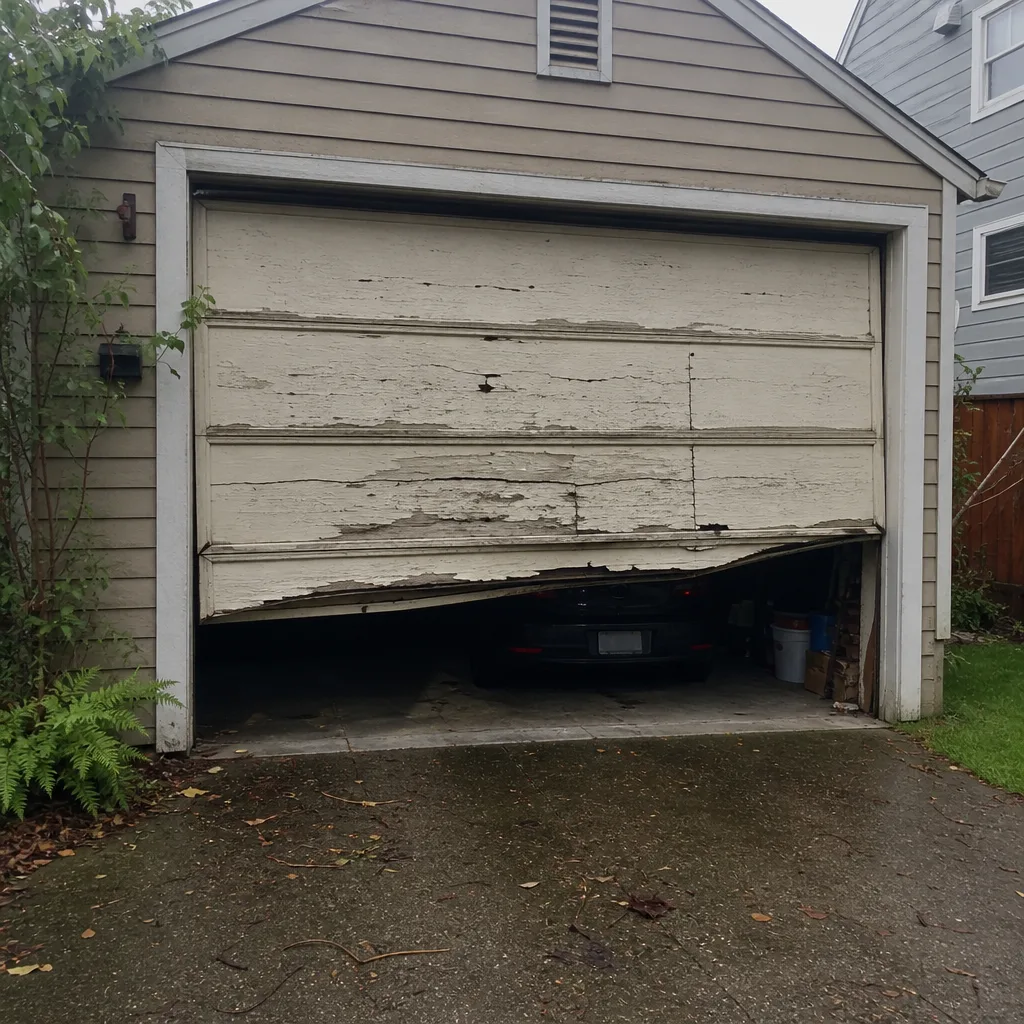 Before
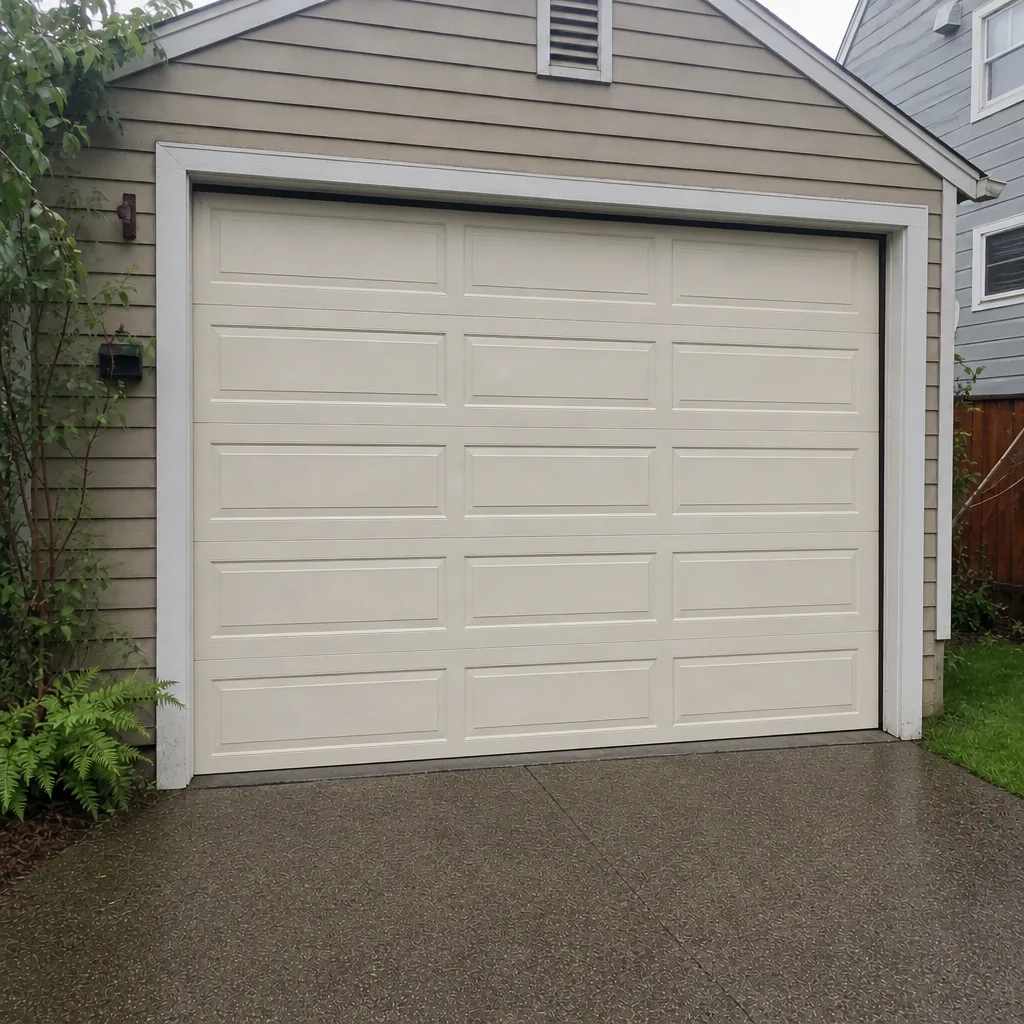 After
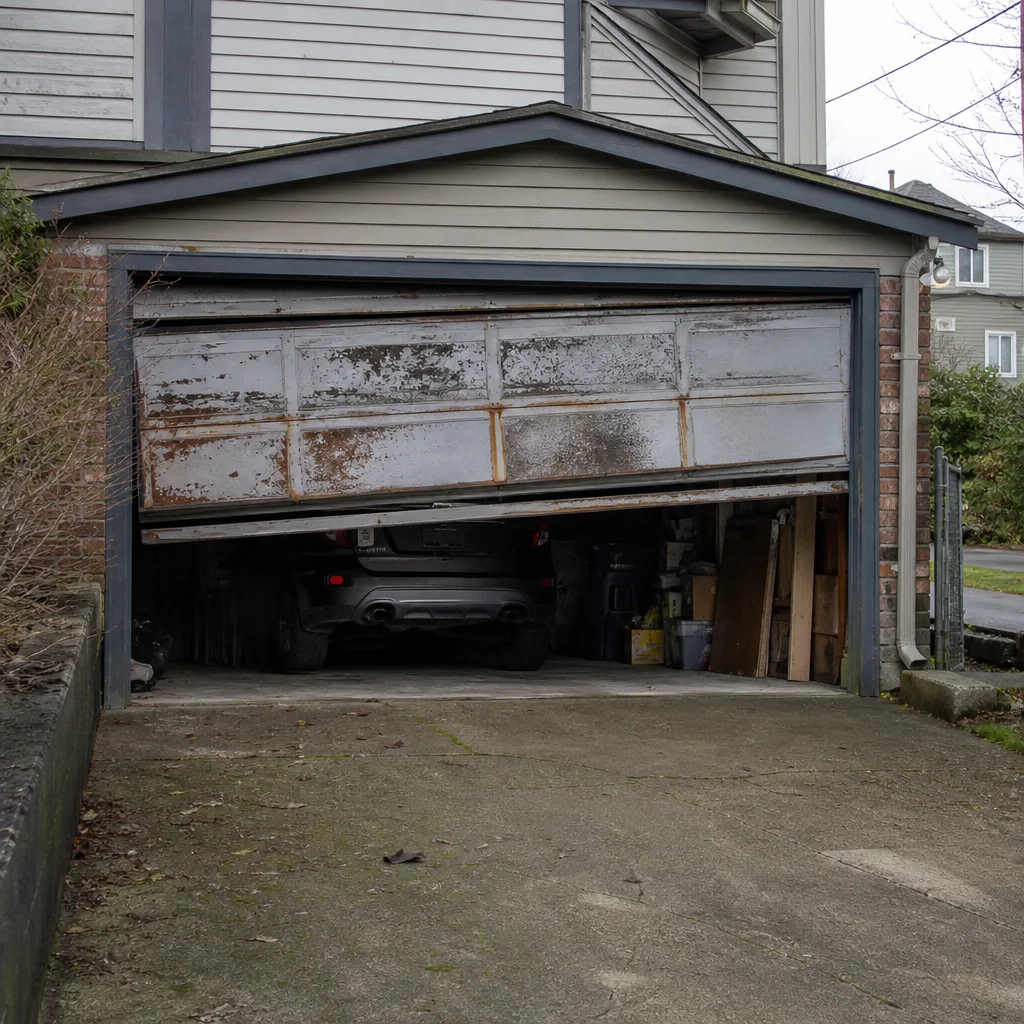 Before
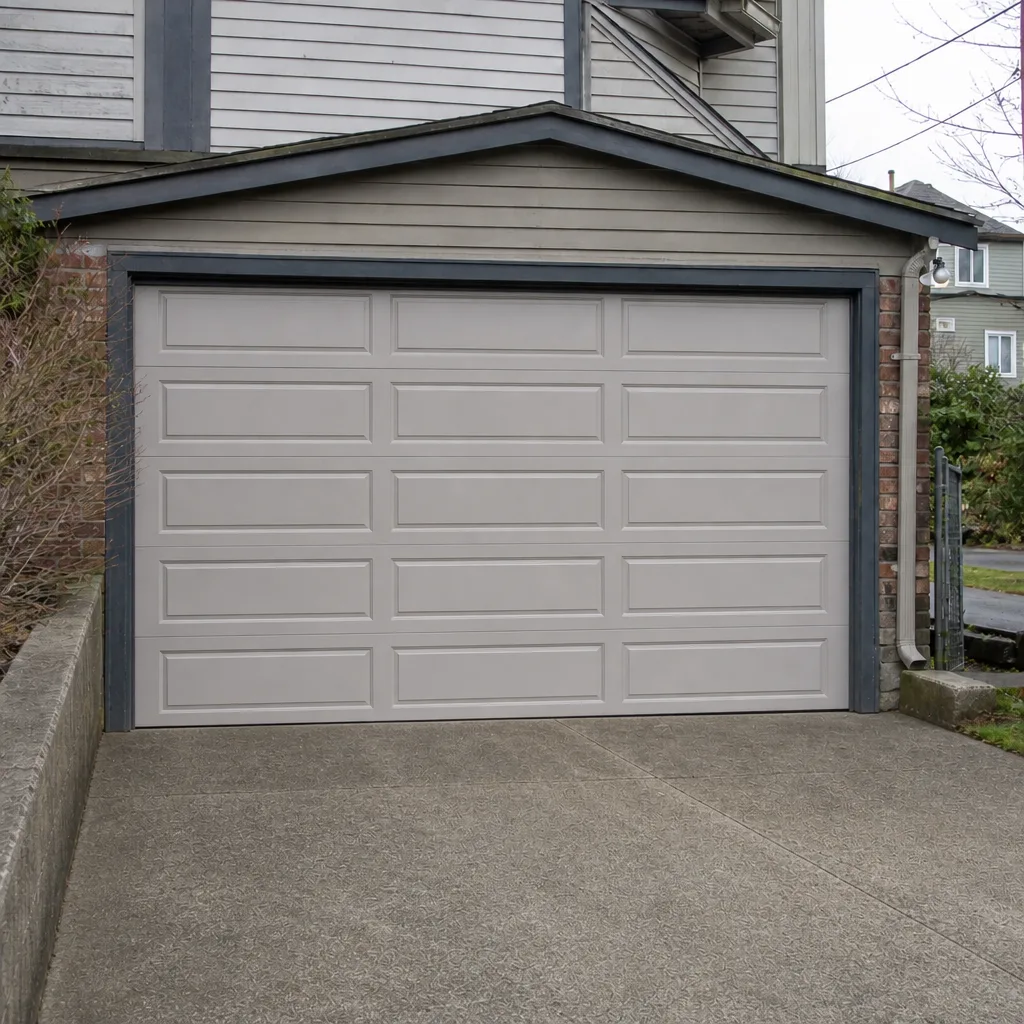 After
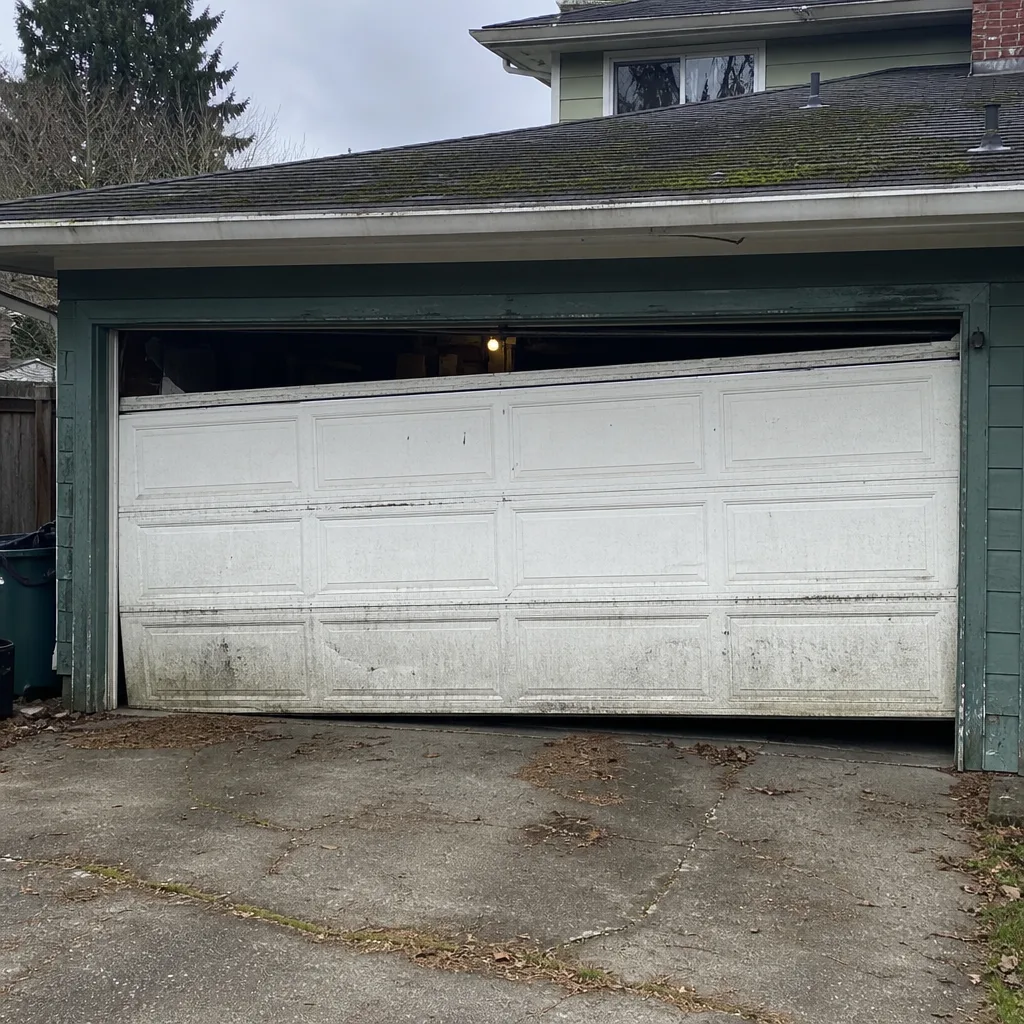 Before
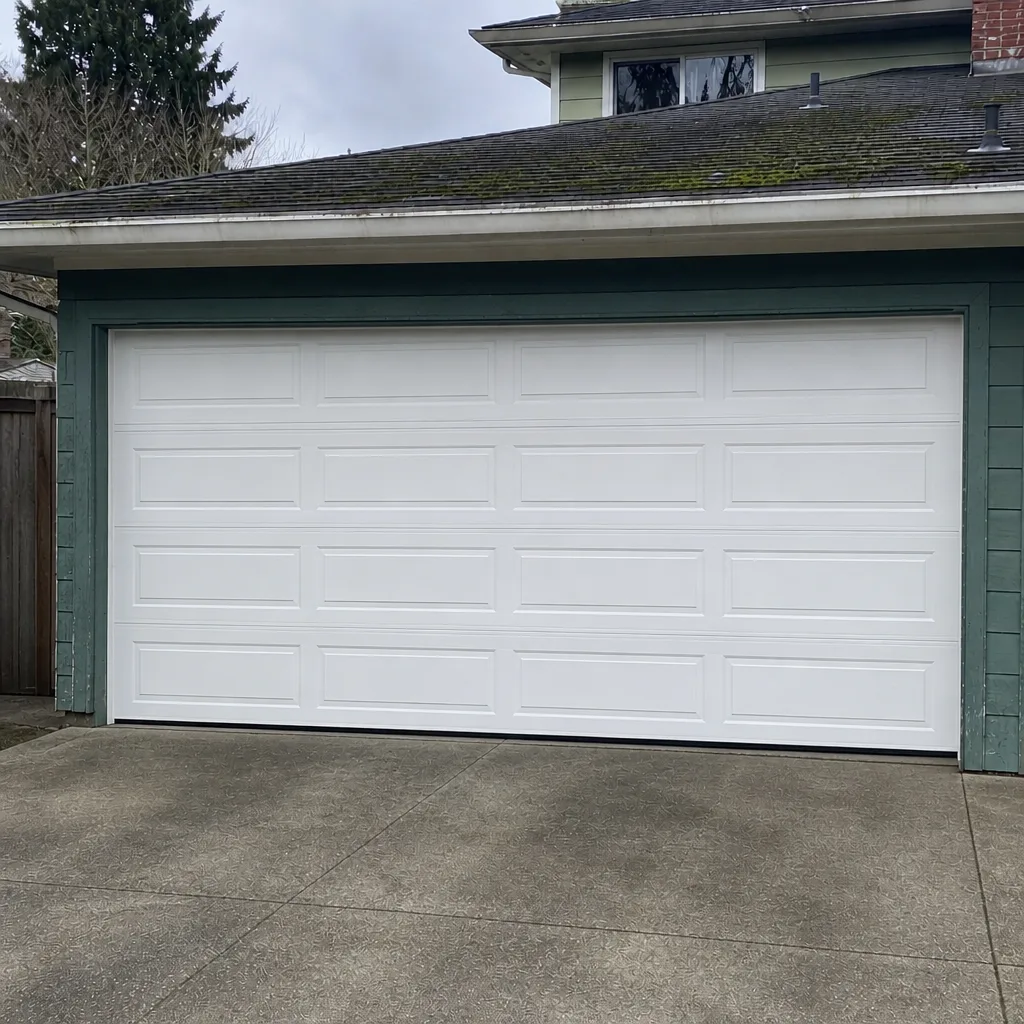 After
When to Call a Professional
Some garage door problems should never wait for a weekend project. A spring that has visibly snapped or tangled is the clearest one. A door that goes up and won’t come down, or comes down and won’t go up, is the next. A door that makes a loud bang, runs unevenly on its tracks, or leaves a visible gap when closed can all point to a balance or alignment problem that’s dangerous to ignore. Opener failures where the door is heavy or off-balance, and safety reverse sensors that don’t trigger, belong on the same list.
The other side of the line is planning work: a new door, an opener upgrade, a replacement on an older home. Those can be scheduled after a measure. The point is to know which side you’re on before you start calling. If it’s a repair you’re trying to avoid, the right call is usually cheaper than the one you make after a door fails.
Capitol Hill Garage Door Repair offers free estimates in Capitol Hill. Call (844) 625-7327. We answer 24/7. Fast dispatch from 7am to 7pm, Sunday through Friday.
Frequently Asked Questions
Start with the phone call. Ask for the contractor registration number and verify it with Washington State, confirm insurance and workers’ compensation, and ask the five specialty questions in this guide. A qualified contractor answers them specifically, offers a written estimate before work starts, and can name which brands and spring types they handle. If a bidder hesitates on the specifics, that’s your signal. Call (844) 625-7327 for a free estimate and ask us the same questions.
Hire a garage door specialist for spring work. Torsion and extension springs are under extreme tension, and the work requires specific tools and training to do safely. A generalist may take the job, but the risk is on you. If a company doesn’t do spring repair in-house, that tells you something about how deep their garage door trade actually goes. A specialist handles it as a routine part of the work.
It depends on the scope. A like-for-like swap and a replacement that changes the opening, the header or the structural support around the door are different jobs, and the second can trigger a permit requirement. Ask your city’s building department about the specific address and scope before you sign anything. A contractor who doesn’t mention permits on a replacement estimate is worth a follow-up question. Call (844) 625-7327 if you want to talk through the scope before you call the city.
The lowest quote usually gets there by using a lighter spring, a cheaper opener component, or a bundled price that hides what’s inside it. A spring that’s undersized for the door wears out faster and strains the opener. The written estimate should itemize the parts so you can compare bids on the same components. If a price is dramatically lower than the others, ask which part is being used and why. Call (844) 625-7327 for a free estimate with the breakdown shown.
Ask specifically which brands they work on, whether they hold any factory relationship, and what that relationship covers. Servicing a brand and being authorized by the manufacturer are different claims, and only the second should be verified with the manufacturer. If a company can’t tell you the difference, they may be using “authorized” loosely. Our technicians have up to 14 years of experience across eight of the industry’s most widely installed brands, including Chamberlain and Clopay, and we’ll tell you plainly which brands we work on and which we don’t.
The written estimate should set the price, and any change in scope should be discussed before work continues. It’s normal for a bidder to see something the phone call missed. What matters is that the change is communicated and agreed in writing before work proceeds. A bidder who gives a firm price on the phone without seeing the door is a bidder whose price is likely to change. If you’re in Capitol Hill and want an estimate that starts with a look at the door, call (844) 625-7327. Estimates are free.
The Bottom Line
Hiring a garage door contractor in Capitol Hill comes down to one filter: does the person taking the job treat garage doors as a specialty or as a side job? Verify registration and insurance, ask the five specialty questions, read the estimate line by line, and confirm who actually performs the work. A specialist gets the spring size right, matches the part to the door, handles the safety test and closes the loop on the permit question. A generalist does what’s easiest. The right call is cheaper than the one you make after a door fails. If you want a specialist to look at the door and put the price in writing first, call (844) 625-7327. We answer 24/7, fast dispatch from 7am to 7pm, Sunday through Friday, and estimates are free.
When the diagnosis matters more than the truck that shows up, the right contractor makes it look simple. That’s the whole point of hiring a Capitol Hill Garage Door Repair specialist: one call, one trade, a door that works. If the job turns out to need a full repair rather than a quick fix, the same call covers garage door repair and the parts that go with it, without sending you looking for a second contractor. We keep parts on hand so you aren’t told to wait for an order, and we work on the brand you already have. If the door needs a measurement before anything else, that’s a short visit, not a sales pitch.
Written by the team at Capitol Hill Garage Door Repair.